

7 Questions to Ask Before Choosing a Die Casting Manufacturer
Choosing the right die casting manufacturer is essential for ensuring consistent component quality, cost efficiency, and reliable production timelines. For OEMs and procurement teams, selecting the right manufacturing partner involves more than comparing quotations. It requires evaluating technical expertise, material capabilities, tooling management, quality control systems, production capacity, and engineering support.
If you are researching how to choose a die casting manufacturer, it is important to assess whether a supplier can meet your component specifications, quality standards, production volumes, and long-term supply requirements. This guide covers seven key questions to help you evaluate potential manufacturers in India and make an informed sourcing decision.
Why Choosing the Right Die Casting Manufacturer Matters
A reliable die casting manufacturer can help streamline production, minimise manufacturing risks, and maintain consistent component performance. Understanding how to choose a die casting manufacturer involves evaluating its ability to identify design issues early, optimize tooling, and recommend suitable manufacturing processes to improve efficiency.
Choosing an unsuitable supplier, however, may result in unexpected expenses, recurring quality issues, tooling downtime, and supply chain disruptions. Evaluating a manufacturer's technical capabilities, engineering support, and production processes helps businesses make informed sourcing decisions and build long-term manufacturing partnerships.
Key Questions to Consider When Choosing a Die Casting Manufacturer
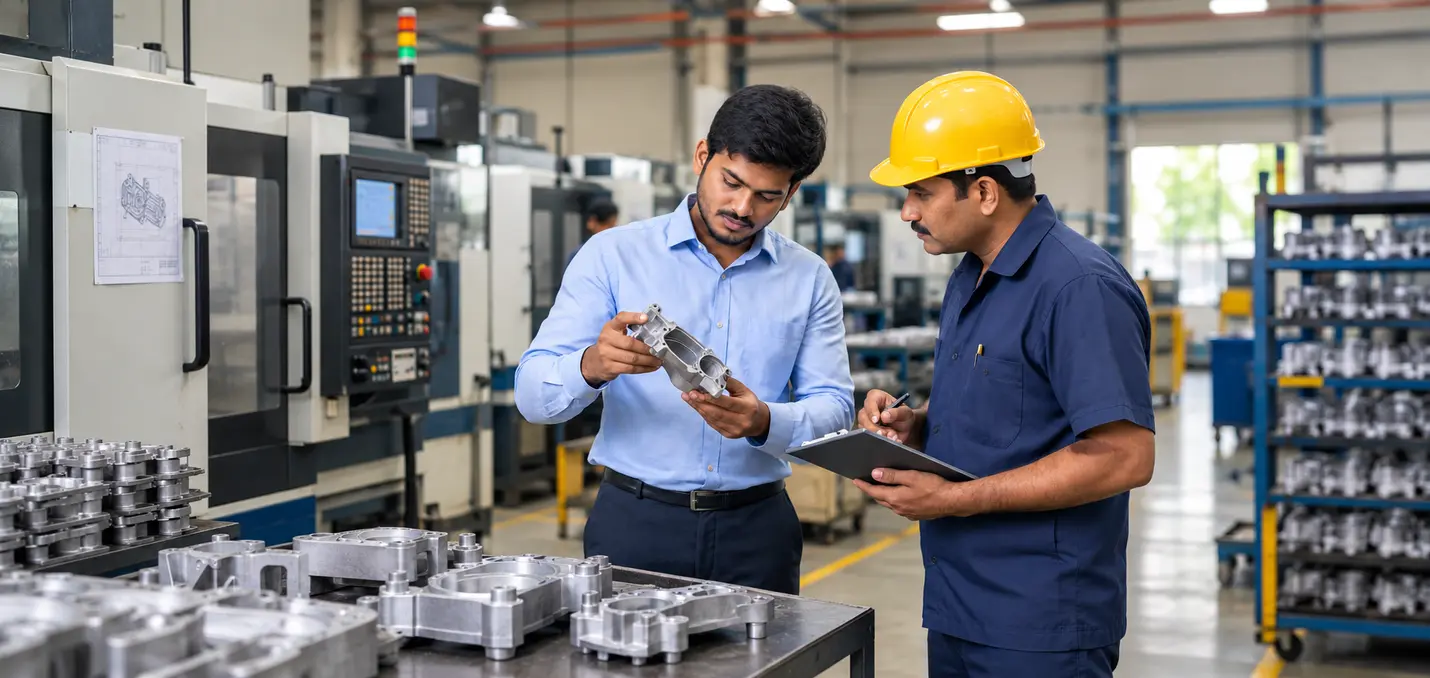
When evaluating a die casting manufacturer, ask questions that reveal its technical capabilities, tooling expertise, quality systems, production capacity, and ability to meet your requirements.
What Materials and Die Casting Processes Do You Offer?
Ask which materials, alloys, and die casting processes the manufacturer supports. Aluminium and zinc are commonly used in die casting, with alloy selection depending on component design, strength, weight, corrosion resistance, and application.
Also, review the manufacturer's machine capacity, clamping force, and relevant process capabilities.
Do You Have Experience With Similar Components?
Ask whether the manufacturer has produced components with similar dimensions, wall thicknesses, geometries, tolerances, and functional requirements.
Relevant experience can help identify potential casting and tooling challenges during design review and process planning.
How Do You Manage Tooling and Die Development?
Ask how the manufacturer manages die design, development, trials, maintenance, repairs, and modifications.
Confirm whether tooling is handled in-house or through qualified partners, and understand how design changes and tool maintenance are managed throughout production.
How Do You Ensure Quality and Inspection?
Ask how quality is controlled from incoming material through casting and final inspection.
Review dimensional and visual inspection methods, material verification, porosity checks, inspection equipment, quality certifications, traceability, and procedures for handling non-conforming components.
Can You Meet Our Required Production Volume?
Check whether the manufacturer's available capacity can support your current and future production requirements.
Ask about machine capacity, production shifts, current utilisation, tooling availability, production planning, and the ability to manage increases in demand.
What Secondary Operations Do You Provide?
Ask whether the manufacturer provides secondary operations such as CNC machining, drilling, tapping, trimming, deburring, surface finishing, and assembly.
Also confirm whether these processes are performed in-house or through qualified external partners.
What Are Your Lead Times and Engineering Support Capabilities?
Ask about lead times for tooling, sampling, validation, production, inspection, and delivery.
Also evaluate the manufacturer's engineering support for drawings, DFM reviews, tooling changes, process issues, and quality concerns. Clear communication and defined project responsibilities can help prevent delays.
How to Evaluate and Compare Die Casting Manufacturers
When comparing die casting manufacturers, avoid focusing only on the quoted unit price. A lower initial quotation may not include all tooling, machining, finishing, inspection, packaging, logistics, or other project costs.
Consider the complete manufacturing and supply requirements.
| Evaluation Factor | What to Check |
|---|---|
| Technical Capabilities | Machine capacity, clamping force, alloy expertise, and suitable die casting processes |
| Engineering Support | DFM reviews, tooling guidance, design feedback, and technical communication |
| Quality Control | Inspection methods, certifications, process controls, defect monitoring, and quality documentation |
| Tooling Management | Die design, development, maintenance, repairs, and modification capabilities |
| Traceability | Material records, production batches, inspection records, and documentation |
| Secondary Operations | CNC machining, drilling, tapping, trimming, deburring, finishing, and assembly |
| Production Capacity | Current capacity, utilisation, production planning, and ability to support future demand |
| Total Cost | Tooling, casting, machining, finishing, scrap, packaging, logistics, and delivery costs |
A supplier with a higher unit price may still provide better overall value when it offers consistent quality, reliable lead times, strong engineering support, and lower production risks.
Common Mistakes to Avoid When Choosing a Die Casting Manufacturer
- Choosing Based Only on Price: A lower quotation may exclude tooling, machining, finishing, inspection, packaging, or logistics costs.
- Overlooking Tooling Capabilities: Poor tooling design or maintenance can lead to defects, downtime, and inconsistent production.
- Failing to Verify Production Capacity: A supplier may meet current demand but struggle when production volumes increase.
- Ignoring Quality Requirements: Confirm that the supplier's inspection systems and quality controls match your component requirements.
- Overlooking Secondary Operations: Additional machining or finishing requirements can create delays if they are not planned upfront.
- Not Clarifying Lead Times: Confirm tooling, sampling, production, inspection, and delivery timelines before placing an order.
Conclusion
Choosing the right die casting manufacturer requires more than comparing unit prices.
OEMs and procurement teams should evaluate suppliers based on material expertise, die casting capabilities, tooling management, quality systems, inspection capabilities, production capacity, secondary operations, engineering support, lead times, and total cost.
Asking the right questions before finalising a supplier can help identify potential technical, quality, capacity, and supply risks early in the process.
The goal is to select a manufacturing partner whose capabilities and processes align with your component requirements, production volumes, quality expectations, and long-term supply needs.
FAQs
Evaluate the manufacturer's material expertise, die casting capabilities, tooling management, quality systems, production capacity, engineering support, and total project cost. Don't base the decision on unit price alone.
Ask about supported alloys and processes, experience with similar components, tooling development and maintenance, quality inspection, production capacity, secondary operations, lead times, and engineering support.
Look for proven technical capabilities, reliable quality controls, suitable equipment, effective tooling management, production capacity, traceability, and the ability to support your required volumes and specifications.
Review quality certifications, inspection equipment, process controls, material traceability, inspection records, defect management procedures, and tooling maintenance practices. Where appropriate, request samples or conduct a supplier audit.
Many die casting manufacturers offer CNC machining and other secondary operations such as drilling, tapping, trimming, deburring, and surface finishing. These services can be useful when components require tight tolerances, machined datums, threaded features, or sealing surfaces.