

Die Casting vs CNC Machining: Which One Is Right for Your Parts?
Introduction
When you need precision metal components, comparing die casting vs CNC machining and choosing the right process is not always straightforward. Both processes can produce accurate parts, but they approach manufacturing in very different ways.
Die casting forms a component by forcing molten metal into a reusable die under high pressure. CNC machining, in comparison, starts with a solid workpiece and removes material using computer-controlled cutting tools.
Your production volume, component design, tolerances, tooling budget, material requirements and delivery schedule all influence which process is the better option. In some projects, the most practical solution is not either process alone. A die-cast component can undergo CNC machining afterwards to achieve critical dimensions and features.
What Is Die Casting?
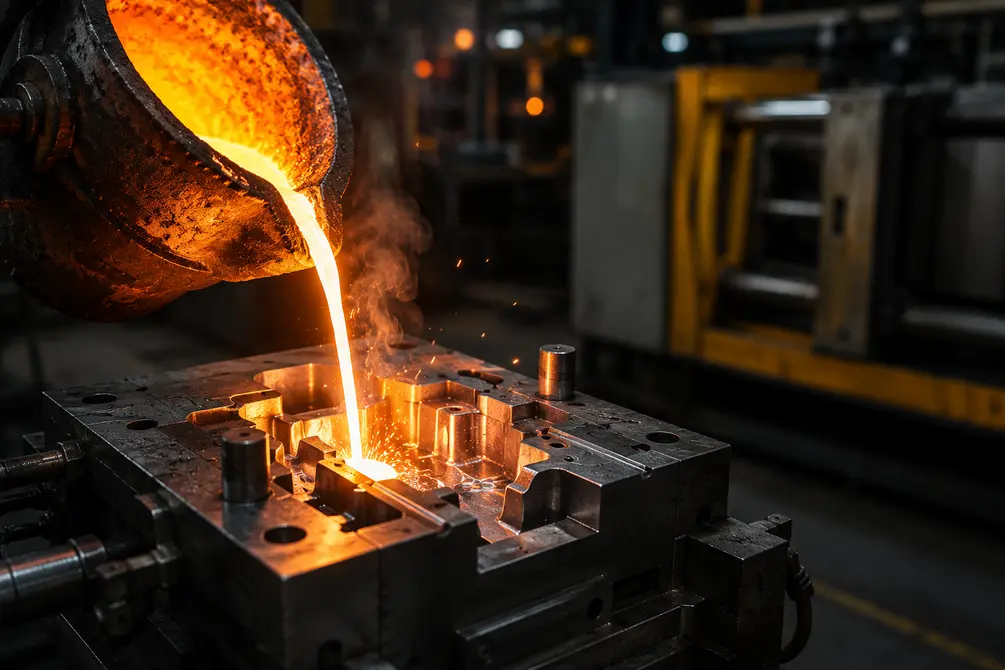
Die casting is a metal forming process in which molten alloy is injected into a specially manufactured steel die under pressure. Once the metal solidifies, the die opens and the component is removed.
The reusable tooling allows the same geometry to be reproduced repeatedly. This makes the die casting manufacturing process particularly useful when you need consistent components in significant quantities.
High-pressure die casting can produce complex shapes, thin walls and good repeatable dimensional control while reducing the amount of machining required afterwards.
Aluminium and zinc alloys are widely used for die-cast components. Aluminium offers a useful combination of low weight, strength and corrosion resistance, while zinc is well suited to smaller components requiring detail and dimensional consistency.
The main consideration is tooling. You need to invest in the die before production begins. That initial cost makes die casting less attractive for very small quantities, but the economics can become considerably stronger as production volume increases.
At Uni-Tech Casting, the process extends from design and die development through casting, machining, inspection and dispatch. The company works primarily with aluminium and zinc alloys and supplies components for automotive, electrical, agricultural, engineering and LED applications. You can also explore its die casting services to understand how these capabilities can support your component requirements.
What Is CNC Machining?
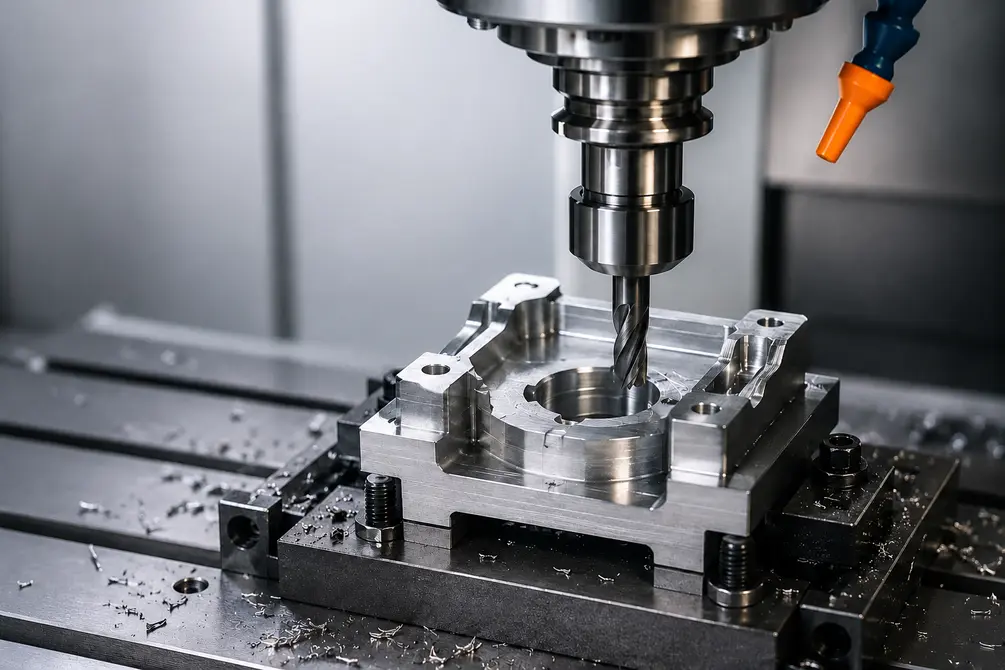
CNC machining is a subtractive manufacturing process. Instead of forming molten metal into a shape, computer-controlled machines remove material from a solid workpiece until the required geometry is achieved.
Depending on the component, operations can include milling, drilling, boring, tapping and other cutting processes. The process provides considerable control over dimensions and allows manufacturers to make changes without producing a new casting die.
That flexibility makes CNC machining useful for prototypes, development work, replacement components and lower-volume production. It can also be the better choice when a component contains features that require precise machining.
However, CNC machining removes material rather than forming the part close to its final shape. A complicated component can therefore require more machining time and remove more material than a suitable near-net-shape casting.
CNC machining and die casting can also work together. Uni-Tech Casting uses CNC and VMC machining after casting for operations such as drilling, tapping and milling when customers require tighter dimensions or specific features.
Die Casting vs CNC Machining: Key Differences
The practical difference between die casting vs machining becomes clearer when you compare the factors that affect your project.
| Factor | Die Casting | CNC Machining |
|---|---|---|
| Manufacturing method | Forms molten metal inside a die | Removes material from a workpiece |
| Production volume | Better suited to medium and high volumes | Strong for prototypes and low volumes |
| Tooling | Requires dedicated dies | No casting die required |
| Part complexity | Excellent for repeated complex geometries | Complex shapes may require multiple operations |
| Dimensional control | Good and repeatable | Very high for machined features |
| Surface finish | Generally good as-cast finish | Depends on tooling and machining parameters |
| Material utilization | Often efficient because parts are near-net shape | More material may be removed |
| Production speed | Very fast once tooling is ready | Depends on part geometry and machining time |
| Consistency | Highly repeatable at production scale | Highly repeatable with controlled machining |
| Initial investment | Higher because of die tooling | Usually lower for starting production |
| Cost per part | Can fall significantly at higher volumes | Can be economical for smaller quantities |
How to Choose Between Die Casting and CNC Machining
There is no universal winner in the CNC machining vs die casting decision. The correct process depends on what your component needs to achieve and how many parts you need.
Consider these questions before selecting a process:
- How many parts do you need?
Higher volumes can make die tooling more economical. - How complex is the component?
Complex, repeatable geometries can favor die casting. - Which dimensions require tight control?
Critical holes, threads and mating surfaces may benefit from CNC machining. - How often will the design change?
CNC machining offers greater flexibility during development. - What is your tooling budget?
Include both the initial tooling investment and long-term production cost. - How quickly do you need production parts?
Consider tooling lead time as well as the eventual production cycle. - Would combining processes make more sense?
Die casting followed by CNC machining can provide an efficient balance between production speed and dimensional control.
Choose Die Casting When…
Die casting is usually a strong option when you need medium- to high-volume production and the component geometry is suitable for a reusable die.
It becomes particularly attractive when you need:
- Large quantities of consistent components
- Complex or integrated geometries
- Repeatable production
- Good surface quality
- Lightweight aluminium components
- Lower per-part costs at production scale
- Minimal material removal after casting
It can also simplify component design by allowing features such as bosses and fastening elements to be incorporated into the casting.
Choose CNC Machining When…
CNC machining is often the better starting point when you need a prototype, a small production run or a component that may undergo several design revisions.
It is particularly useful when you need:
- Low-volume production
- Prototypes and development parts
- Frequent design changes
- Highly controlled machined features
- Custom components
- No dedicated casting die
- Direct production from a digital design
CNC machining can also complement die casting rather than compete with it. A cast component can be machined where the application demands tighter dimensions, threads, holes or accurately positioned mounting surfaces.
This combined approach can prevent you from forcing one manufacturing process to handle every feature of the component.
Conclusion
The choice between die casting vs CNC machining should be based on the complete manufacturing requirement rather than one isolated factor. CNC machining gives you flexibility, precise control and a practical route for prototypes and lower-volume production. Die casting can offer faster repeatable production and favorable per-part economics when volumes increase.
For many components, the most effective answer may be a combination of both. Die casting can establish the main geometry efficiently, while CNC machining can finish the features that demand closer control. Uni-Tech Casting provides both die casting and CNC/VMC machining capabilities.
Contact Uni-Tech Casting to discuss your component requirements and identify the most suitable manufacturing route for your project.
FAQs
Die casting forms molten metal in a reusable die, while CNC machining removes material from a solid workpiece. Die casting is generally better for medium- and high-volume production, while CNC machining is suitable for prototypes, low-volume parts and precision features.
Die casting can be more cost-effective at higher production volumes because the tooling cost is spread across many parts. CNC machining typically requires less upfront investment but may have a higher per-part cost for complex parts or large amounts of material removal.
Yes. CNC machining is often used after die casting to finish holes, threads, mounting surfaces and other features requiring tighter dimensional control. Uni-Tech Casting also provides CNC and VMC machining for secondary operations.
Neither process is universally better. CNC machining is often preferred for prototypes, low volumes and tight-tolerance features, while die casting is better suited to repeat production of complex parts at medium and high volumes.
Choose die casting when you need consistent, repeatable production of complex metal parts in medium or high quantities. The process can reduce machining requirements and lower the per-part cost as production volume increases.
Both can be suitable for aluminium parts. Aluminium die casting is well suited to high-volume production of complex, lightweight components, while CNC machining is useful for prototypes, low volumes and precision features. A combination of both processes can also be effective for production parts.