

Why India Is Becoming a Global Hub for Aluminium Die Casting
Modern manufacturing needs speed and precision. This is true, especially when casting complex metal parts. Aluminium die casting has become a key part of many industries in India, from automotive to electrical and consumer goods.
As India's industrial sector grows each year, aluminium die casting plays a bigger role. It gives manufacturers real benefits in quality, cost, and technical skill. This is why more global buyers now look to India for reliable, high-quality die-cast parts.
Growth of the Aluminium Die Casting Industry in India
India's aluminium die casting industry has become a major part of the country's manufacturing sector. The India automotive parts aluminium die casting market is expected to reach USD 1.83 billion in 2026 and grow at a 7.29% CAGR through 2031 (Source: Mordor Intelligence). This growth is driven by rising demand from the automotive, electric vehicle, and industrial sectors.
High-pressure die casting (HPDC) remains the most widely used manufacturing process for producing precision aluminium components, especially in the automotive industry.
Why India Is Becoming a Preferred Manufacturing Destination
India is fast emerging as a leading manufacturing hub for aluminium die casting. It offers quality production facilities, skilled engineers, fair pricing, and a strong manufacturing network. This helps manufacturers supply precise die-cast parts to buyers around the world. Here are the main reasons why.
1. Growing Demand from the Automotive and EV Industry
The automotive industry is the biggest user of aluminium die-cast parts. As India shifts toward EVs, manufacturers need lighter parts. These parts help improve battery efficiency and vehicle performance.
This is why many aluminium die casting exporters in India make parts like motor casings, battery housings, engine parts, structural brackets, and gearbox components. As the global EV market grows, demand for aluminium die casting in India keeps rising.
2. Easy Availability of Raw Materials
India has a strong, steady supply of aluminium. This lets manufacturers make large volumes of parts without relying on imports. India is one of the world's top aluminium producers. Several major companies support this supply.
States like Odisha also provide large amounts of raw material for aluminium casting. This steady supply helps manufacturers cut costs, work faster, and deliver products on time.
3. Modern Manufacturing Technology
India's die casting industry invests in modern machines and better production methods. This helps meet high quality standards. Many manufacturers now use high-pressure die casting machines, CNC machining centers, robotic automation, CAD/CAM design software, and advanced inspection systems.
These tools help make parts that are accurate, strong, and consistent. They also boost output and cut down on waste.
4. Strong Manufacturing Hubs Across India
India has several well-developed regions that focus on aluminium die casting and engineering. The major hubs include:
- Gujarat and Maharashtra – Known for automotive manufacturing and large-scale production.
- Coimbatore and Chennai (Tamil Nadu) – Known for precision engineering, tooling, and supply to automotive and aerospace industries.
- Odisha – A key center for aluminium production, thanks to its bauxite reserves and aluminium refineries.
These industrial clusters offer skilled workers, reliable suppliers, and strong logistics. This makes manufacturing faster and more cost-effective.
5. Cost-Effective Manufacturing with Quality Standards
India's aluminium die casting industry delivers high-quality parts at fair prices. Manufacturers benefit from an efficient supply chain and a skilled workforce, all at a lower cost.
At the same time, many Indian companies follow global quality standards, like ISO certification, and strict quality checks. This lets them supply precise aluminium die-cast parts to industries like automotive, electronics, engineering, aerospace, and industrial machinery.
Industries Driving the Demand for Aluminium Die Casting
Several industries are driving the demand for aluminium die casting in India. Some of the key sectors include:
Automotive Advancements
The automotive industry drives most of the demand for aluminium die-cast parts. As the world focuses on fuel efficiency and lower emissions, automakers use lighter materials like aluminium instead of steel.
Engine blocks, transmission parts, and chassis parts are common uses. They help improve performance and fuel economy.
Electronics and Electrical Industries
The devices we use every day, like smartphones and laptops, use aluminium die casting too. This process creates small, detailed parts that release heat well.
This is important for high-performance electronics. Aluminium also conducts electricity well, which makes it ideal for connectors and housings.
Industrial Equipment and Machinery
Manufacturing, construction, and mining industries all use machinery made with aluminium die casting.
The material is strong and resists corrosion well. This makes it a good fit for pump housings, compressors, and other parts that face tough conditions.
Agriculture Equipment
Farm machinery increasingly uses lightweight aluminium parts. This boosts performance and reduces the weight of the equipment.
Common products include tractor parts, irrigation tools, pump bodies, and machine housings.
Engineering Equipment
General engineering fields have steady demand for aluminium die-cast parts. These parts go into precision machines, automation tools, and mechanical assemblies.
They need to be accurate and long-lasting to work well in these systems. This steady demand keeps manufacturers busy year-round.
Role of Technology and Quality Standards
Modern technology has turned India's die casting industry into a strong global player. Manufacturers now invest in better equipment to boost precision, output, and consistency. Here are the key technologies that help.
HPDC Machines
Automated HPDC machines make complex aluminium parts with high accuracy and very few defects.
Precision CNC Machining
Many die-cast parts need extra machining to meet tight standards. CNC machining offers high precision every time.
Automation
Automation reduces human error and keeps quality consistent. It's used for trimming, process tracking, robotic handling, and production monitoring.
Quality Inspection
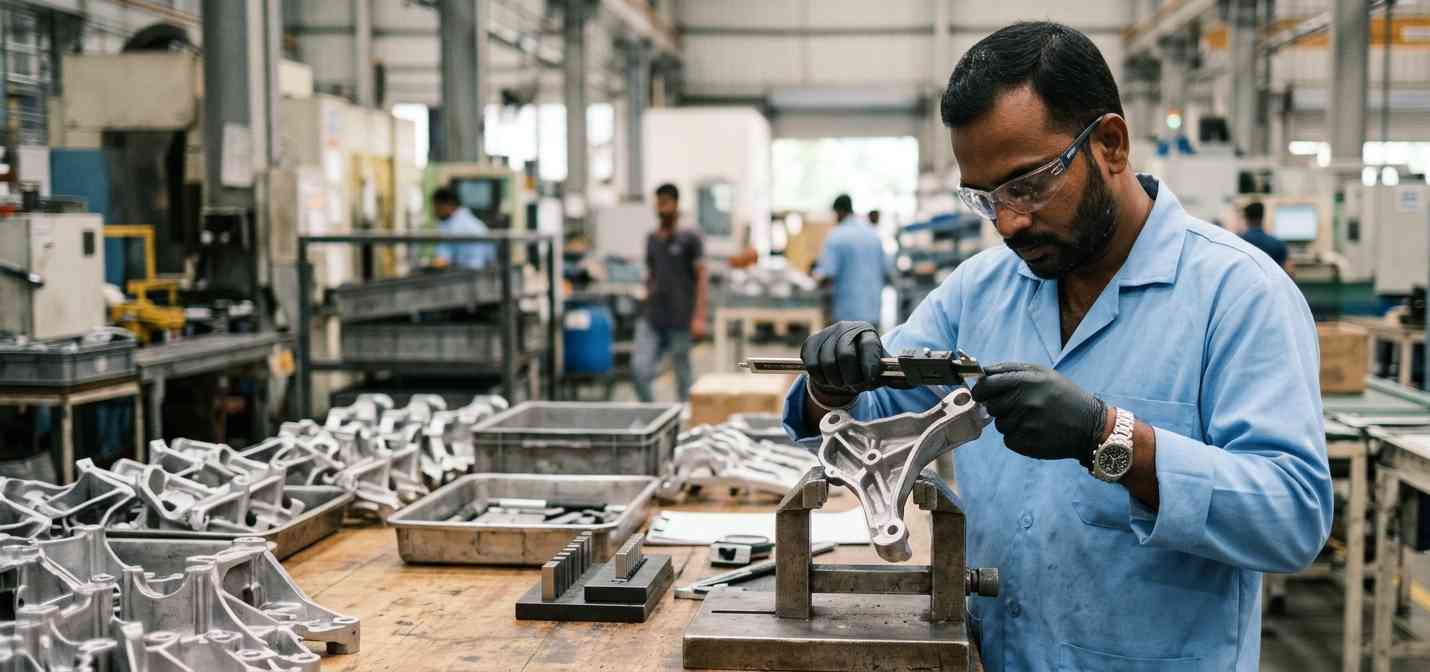
Trusted manufacturers run strict checks during production. Common checks include pressure testing, dimension checks, surface finish checks, strength testing, and chemical analysis.
International Standards
Many Indian manufacturers follow global quality standards and custom systems built for specific clients. This keeps quality consistent and builds trust across industries.
Future of India's Aluminium Die Casting Industry
The future of India's aluminium die casting industry looks strong. Global manufacturers keep looking for new places to source parts. Here are the key trends to watch.
Expansion of Electric Vehicles
As the world moves toward electric mobility, demand for lightweight aluminium parts will keep growing. EV makers need strong, light components to boost range and battery performance.
Lightweight Engineering
Manufacturers keep replacing heavier metals with aluminium across vehicle parts. This shift improves fuel efficiency, cuts emissions, and lowers overall operating costs.
Sustainable Manufacturing
More manufacturers now focus on eco-friendly methods, such as energy-efficient production and aluminium recycling. This helps them meet global sustainability goals and win over eco-conscious buyers.
Smart Manufacturing
Industry 4.0 tools, like automation, real-time monitoring, and predictive maintenance, are improving production speed. These tools also help maintain consistent part quality.
Increasing Export Opportunities
As global companies search for reliable suppliers, aluminium die casting exporters in India are set to grow. Indian manufacturers now serve OEMs and engineering firms worldwide.
Conclusion
India is fast becoming the top manufacturing hub for precision aluminium parts. Strong infrastructure, skilled workers, modern technology, low costs, and consistent quality have made India's aluminium die casting industry a global leader.
As industries like automotive, EVs, industrial machinery, electronics, and engineering keep growing, demand for precision aluminium die-cast parts will only rise. With advanced manufacturing capabilities, competitive production costs, and a growing export network, Indian aluminium die casting manufacturers are well-positioned to meet the increasing global demand for high-quality precision components.
FAQs
India is becoming a global hub for aluminium die casting due to its skilled workforce, competitive manufacturing costs, advanced production technologies, strong supply chain, and growing demand from the automotive and EV industries.
Aluminium die casting is used across many industries, including EV, consumer electronics, telecom, aerospace, industrial machinery, and automotive.
They choose India because of low-cost manufacturing and strict adherence to international quality standards.
It offers low-cost mass production of strong, lightweight parts. It also gives a good strength-to-weight ratio, strong heat and electrical conductivity, and corrosion resistance. This serves the global automotive and electronics industries well.
India's aluminium die casting industry is expected to grow steadily over the coming years, driven by increasing demand from the automotive, electric vehicle, aerospace, electronics, and industrial sectors. Continued investments in advanced manufacturing and exports are expected to support this growth.