

Aluminum Die Casting: Process, Advantages, and Applications
Modern industries are increasingly seeking lightweight, durable, and precision-engineered metal parts. One of the efficient manufacturing methods used is aluminum die casting. It is a widely used manufacturing process in aerospace, automotive, machinery, electronics, and consumer goods industries because it produces high-quality components consistently.
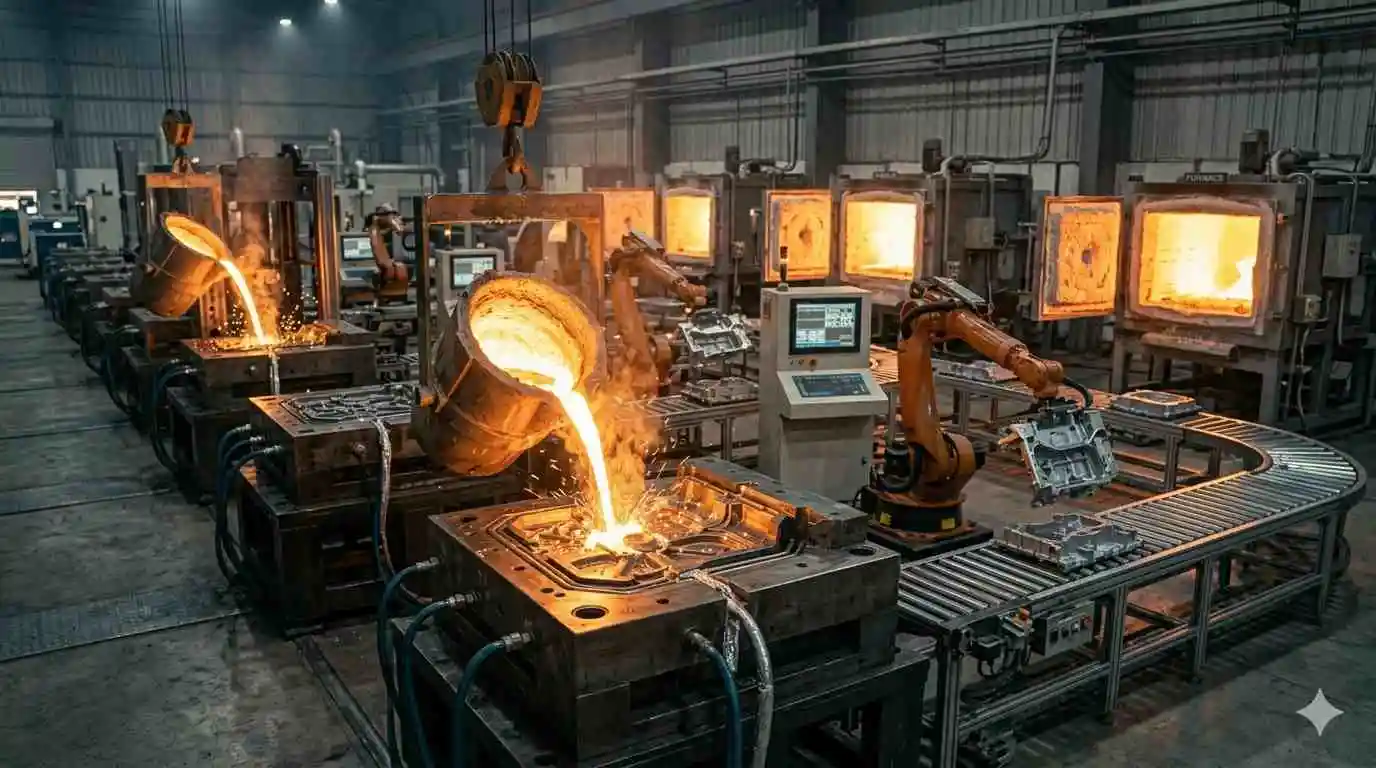
Manufacturers prefer the aluminum die casting because it offers strength, thermal conductivity, corrosion resistance, and low weight. When combined with die casting technology, it becomes a suitable material that produces complex parts with tight tolerances.
It is used to manufacture the transmission housings, engine blocks, structural supports, etc., and meet your industrial needs. Read this blog to know what aluminum die casting is, its process, advantages, and applications of aluminum die casting.
What is Aluminum Die Casting?
Aluminum die casting is a manufacturing process in which molten aluminum is injected into a steel mold (die) under high pressure. It allows the mass production of durable parts in several industries.
Aluminum Die Casting Process
Here are the stages involved in the aluminum die casting process that ensure quality production
Mold Design and Production
The first step in the die casting process is mold designing and production, which shapes the molten aluminum into the desired component. The die includes the two halves, including the ejector half and the cover half, that fit together to make a cavity that matches the component's shape. The die is made from high-grade tool steel because it can withstand the high pressures and temperatures involved in it.
Preparing the Die
Before starting the casting, workers apply the lubricant to the inner surfaces to prepare the die. The lubricant works to regulate the die temperature and facilitates the removal of the finished component.
Melting the Aluminum
Then, the foundry melts the aluminum at temperatures between 1,200°F and 1,400°F (650°C and 760°C).
Injecting the Aluminum
The next stage in the process is the injection of molten aluminum into the die cavity at high pressure. It ensures that the aluminum fills the cavity, captures the most minor details, and produces the component with tight tolerances.
Cooling and Solidification
The cooling time of the die casting component depends on its size, thickness, and complexity. Then the die is kept closed and under pressure to ensure solidification.
Ejection
Once it solidifies, the die halves are separated, and finished parts are ejected from the ejector half of the die by using pins or compressed air systems. The workers should also carry this step to avoid damaging the component.
Trimming and Finishing
Next, the component rejected has excess material. Manufacturers remove it and trim the die with a saw or other tools for this purpose. After trimming, they undergo the component to various finishing processes, like deburring, polishing, or surface treatments. These processes depend on the specific application requirements.
Quality Control and Inspection
The final step in the casting process involves inspecting the finished component to ensure it meets the required specifications. The quality control stage can include visual inspections, dimensional checks, and advanced testing methods.
Key Advantages of Aluminum Die Casting
Here are the advantages of the Aluminum die casting
Lightweight and Strong
Aluminum is a strong and lightweight material used in various industries. It allows you to produce lightweight parts with high strength-to-weight ratios. It makes it a suitable choice to produce components that need both strength and weight savings.
High Precision
It is well known for producing precise and accurate components with tight tolerances. As a result, parts produced through die casting require minimal or no post-processing, which saves time and reduces production costs.
Excellent Surface Finish
This casting procedure yields the components with a uniform surface finish. It eliminates the need for additional surface finishing processes, such as sandblasting or painting, which can consume time and resources.
Versatility
Another benefit of the Aluminum die casting is that it creates the parts in various sizes and shapes, and becomes a flexible manufacturing process. It allows the manufacturers to produce the complex parts with intricate details that are difficult to make with other methods.
Cost-Effective
It is a cost-effective casting process because of its minimal post-processing, high production efficiency, and ability to produce precise parts consistently. It makes it an appealing process for large-scale production runs.
Durability
Due to its durability, it is able to create long-lasting and corrosion-resistant components. It makes it suitable for harsh environments or applications where the parts face high wear or stress.
Limitations of Aluminum Die Casting
The drawbacks of the Aluminum die casting are given below
Limited Material Choices
This casting process relies only on aluminum alloys. Even these alloys have many advantages, but they do not fit the applications that need specific properties, such as magnetic qualities or high temperature resistance.
Tooling Costs
The initial tooling costs for aluminum die casting are high. It has become an expensive process to achieve consistency and accuracy while producing the components.
Production Size Limitations
Although the aluminum die casting process can create parts of various shapes and sizes, it has limits on the size of parts produced. It becomes a disadvantage for the applications that require large parts.
Surface Imperfections
Despite the excellent surface finish that aluminum die casting offers, instances of surface imperfections can happen, such as air bubbles or porosity. Various factors, like the temperature of the molten aluminum or the mold design, can cause these issues. While proper design and manufacturing techniques can minimize these imperfections, they may still occur.
Environmental Concerns
Manufacturing aluminum alloys requires energy and resources and has an impact on the environment. It emits greenhouse gases. Disposing of molds during this process also causes environmental challenges.
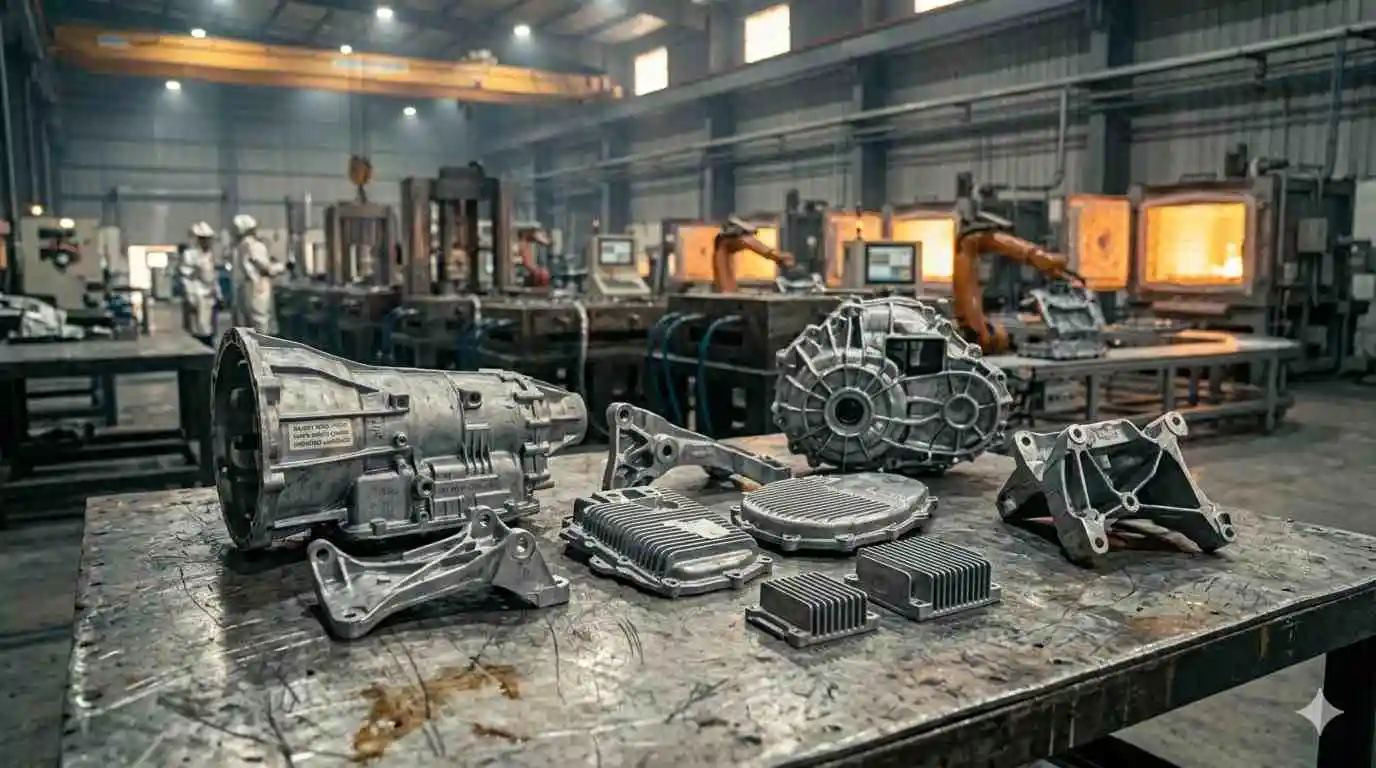
Applications of Aluminum Die Casting
Here are the applications of aluminum die casting in multiple industries because of its versatility and durability.
| Industry | Applications |
|---|---|
| Automotive | Engine blocks, transmission cases, wheels |
| Aerospace | Structural components, Aircraft components, brackets |
| Electronics | Housings, connectors, Heat sinks |
| Construction | Architectural hardware, structural supports |
| Consumer Goods | Furniture, Cookware, and decorative items |
| Marine | Boat engine parts, Propellers, hull components |
Why Aluminum is Preferred in Die Casting
Aluminum is a widely used material because of its exceptional balance of performance and affordability. Here is why it is used in die casting
- High strength
- Lightweight properties
- Excellent thermal conductivity
- Recyclability
- Corrosion resistance
- Cost efficiency
It is an eco-friendly material and is recycled repeatedly without losing its properties. Because the industry focuses on energy efficiency and sustainability, aluminum die casting continues to gain importance.
Conclusion
Aluminum die casting is a versatile manufacturing process that produces high-quality and durable parts. It enables the creation of lightweight components with excellent precision and strength, making it valuable across several industries.
By staying updated with modern techniques, Uni-Tech Casting Pvt. Ltd. delivers reliable aluminum die casting solutions that ensure consistent quality and efficient production for diverse industrial applications.
FAQs
Aluminum die castings are the process used to create the metal components by injecting molten aluminum into hardened steel molds (dies) under high pressure. It produces durable, complex, and lightweight parts with precise dimensions and a smooth surface finish, making it essential in modern manufacturing.
Aluminum casting is used to create durable, lightweight, and corrosion-resistant metal components for automotive, aerospace, electronics, and consumer goods industries. Its common applications are producing transmission cases, engine blocks, cookware, housings, and structural components requiring high strength-to-weight ratios.
The aluminum die casting process includes injecting molten aluminum into steel molds under high pressure. It provides the superior combination of excellent corrosion resistance, high strength-to-weight ratio, complex geometrical capabilities, and affordable mass production.
The minimum wall thickness ranges from 0.8 mm to 1.5 mm on the basis of the alloy type, component design, and manufacturing requirements.
No, aluminum die casting is cost-effective for large-scale production. While tooling costs are high initially, the per-unit cost becomes low in mass production due to high efficiency and minimal finishing requirements.