

Applications of Die Casting Across Different Industries
Die casting is the cornerstone of modern manufacturing. Its speed, precision and efficiency are excellent, and become a popular choice in various industries. From consumer electronics to automotive components, it plays a vital role in producing quality parts and meets the strict specifications. In this blog, we tell you the Die casting applications across the different applications.
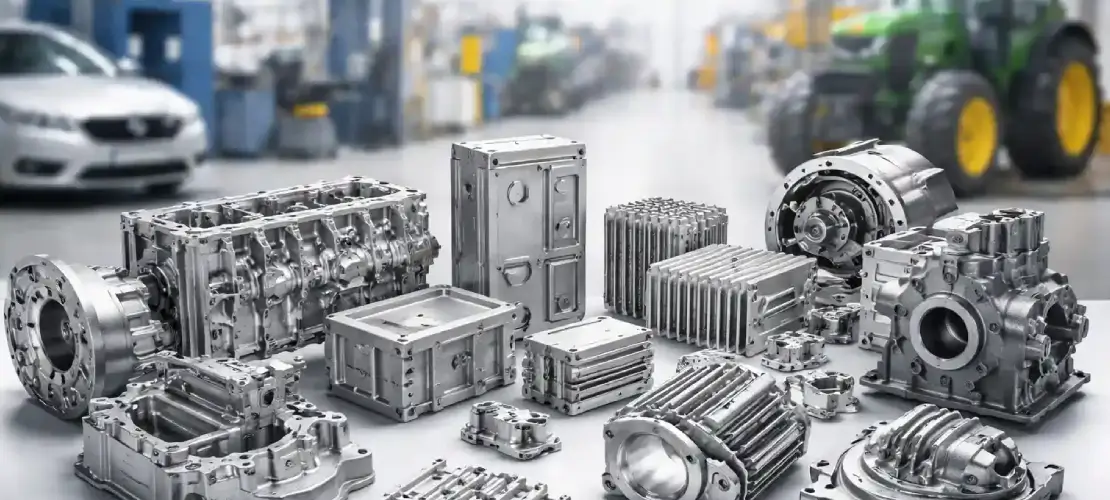
Applications of Die Casting
Industrial die casting is a flexible production process used in various industries to create durable, precise and quality metal components. It produces the components of complex shapes, and handles large scale production. From automotive to electronics and agriculture, it efficiently supports various applications while providing strength and cost savings. Here are the industries where it is used:
Automotive Industry Applications
It is widely used in the automotive industry. High-pressure Automotive die casting is used to produce the critical parts such as transmission housings, engine blocks and structural components. It is essential to produce strong and lightweight parts. The components made will improve fuel efficiency and vehicle performance.
All parts adhere to high-quality standards for safety, durability, and precision. As the electric vehicle market grows, innovative die casting applications for lightweight housings and electric motor parts are experiencing significant growth. These components focus on high performance and durability, paving the way for efficiency and sustainability in vehicles.
Electrical Industry Applications
Die casting is widely used in the electronics industry and manufactures the components that require the excellent thermal conductivity and precise dimensions. Here are parts produced by the electrical die casting process
Enclosures and Housings: Die-cast aluminum is used for electronic device enclosures and housings. It provides durability and effective heat dissipation.
Heat Sinks: Die-cast aluminum heat sinks are popular in electronic devices because they dissipate heat efficiently and protect sensitive parts from overheating.
LED Industry Applications
It is used to manufacture the housings, heat sinks, and mounting brackets in the LED industry. These LED die casting parts require good thermal conductivity to dissipate heat effectively, ensuring a longer lifespan and consistent performance for LEDs. The commonly used material for this industry is aluminum, because it is lightweight and heat-resistant.
This die casting also enables precise designs and smooth finishes, both important for modern lighting systems. This process supports indoor and outdoor LED applications, boosting durability, energy efficiency, and product reliability.
Agricultural Equipment Applications
Die casting is widely used in agricultural equipment and produces strong and durable parts for tractors, harvesters, and irrigation systems. These Agriculture die casting parts endure heavy loads, vibrations, and tough environmental conditions like dust, moisture, and temperature changes.
Materials like aluminum and zinc offer corrosion resistance and longevity. Because die casting maintains the precise dimensions and consistent quality, it is used in the agricultural industry and maintains machinery performance. Hence, it helps lower maintenance needs while improving efficiency and reliability in modern farming.
Choosing Die Casting for Industrial Applications
Industrial die casting is well known for efficiency, scalability and precision. Many industries use this casting method to manufacture quality and durable components in large amounts. It has the ability to reduce costs, ensure consistency and support complex designs. Here is why it is used for industrial applications.
Cost Efficiency
Die casting reduces material waste and labor and saves long-term production costs. Though tooling is costly at first, high-volume manufacturing greatly reduces per-unit costs, making it economically effective.
High Precision
The die casting process provides exceptional dimensional accuracy and tight tolerances. This cuts down on the need for further machining, saving time and money while ensuring parts meet strict quality standards.
Material Versatility
It works with a variety of metals, including aluminum, zinc, and magnesium. This flexibility helps manufacturers choose materials based on strength, weight, and application needs.
Fast Production Rates
Die casting allows for fast production cycles, making it ideal for large-scale manufacturing. High-speed injection and quick cooling enable manufacturers to produce thousands of identical parts efficiently.
Consistent Quality
Each die-cast part is made using the same mold, ensuring uniformity and reliability. This consistency is essential for industries that need standardized parts with dependable performance and few defects.
Design Flexibility
Die casting allows for the creation of complex shapes, thin walls, and intricate details. This design flexibility helps manufacturers develop innovative products without sacrificing strength, functionality, or production efficiency.
How does Uni-Tech Casting support die casting industrial applications?
At Uni-Tech Casting, we also offer die casting applications and solutions to several sectors, such as electricals and general engineering. We support the die casting industry with our quality facilities and precision. We provide high-pressure, low-pressure, and gravity die casting solutions tailored to our customers' needs.
At Uni-Tech Casting, we prioritize quality and innovation, ensuring that our die casting applications exceed standard industry expectations. We continually explore new possibilities in die casting, creating lightweight, strong, and cost-effective solutions for some of today's biggest manufacturing challenges.
Conclusion
Die casting is a flexible production process and serves many industries, from automotive to agricultural, electronics, and more. Its capability to create high-quality, durable, and precise components makes it an essential technology in today’s production landscape. With ongoing advancements in die casting technology and materials, we anticipate even more innovative applications in the future.
FAQs
Die casting is used in electrical, automotive, LED lighting, industrial sectors and agriculture and produces complex metal components.
The common applications of Die casting are the electrical housings, engine parts, machinery parts, LED fixtures and consumer product casings.
There are various advantages of Industrial die casting including durability, high precision, cost efficiency, fast production, consistent quality and meeting your large-scale manufacturing needs.
Aluminum and magnesium alloys are the best materials used to die-cast the LED component. It is widely used because of its lightweight nature and excellent thermal conductivity properties.
Automotive die casting produces various parts like Engine blocks, transmission housings, brackets, battery enclosures, and structural components.
Read more: Most Common Metals Used in Die Casting