

What is Die Casting? Process, Materials & Benefits
Die casting is the efficient and versatile manufacturing process that produces the complex metal parts with durability and precision. It is used in diverse industries like automotive, agricultural and electrical. It allows for high-speed production of parts with quality.
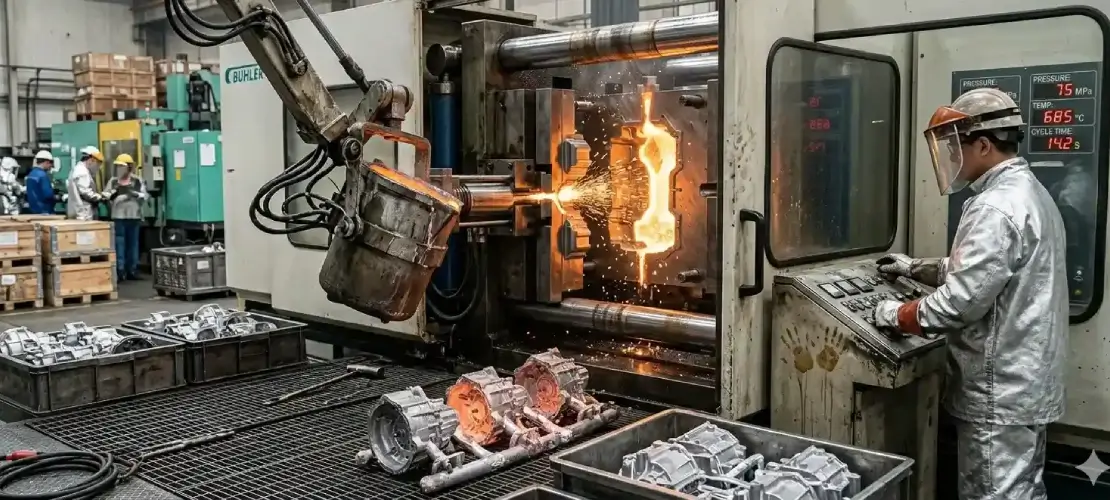
Manufacturers must understand the Die casting process, materials used in manufacturing and its benefits. It helps to achieve efficiency and quality in production. In this blog, we tell you what die casting is, step by step Die casting process and highlight its benefits.
Introduction to Die Casting
Die casting is the metal casting process that uses metal dies to produce metal components. Molten metal is poured and injected into metal dies and solidifies. Once solidified, the parts are removed from the mould and put to use after finishing operations. This process is used to cast non ferrous metals like magnesium, aluminum, zinc and other alloys.
Die Casting Process
The die casting process includes the steps, including mould design, metal preparation, injection, casting, and finishing. Let us discuss each step involved in the process.
Mould Design
The first step is to create a mould known as a die. This mould is made with steel or aluminum and designed to withstand the high temperatures and pressures of the process. The mould design begins with developing a CAD model of the required mould. It is then used to produce mould through CNC machining, which is further applied in the casting process.
Metal Preparation
Next, the metal is prepared for injection. This metal is usually an alloy, like aluminum, magnesium, or zinc. The metal is melted in a furnace and then poured into a ladle.
Injection Process
Once the metal is liquid, it is injected into the mould under high pressure. The molten metal fills the mould cavity and cools to form the desired shape.
Casting Process
When the metal cools and hardens, the mould opens and ejects the components. It ensures that the die casting parts are cooled completely before handling to avoid potential injuries.
Finishing Process
The last step in the industrial die casting process is finishing the part. Surface finishing is crucial in die casting because it can affect the part's durability and function. Common finishing methods include anodizing, powder coating, and wet plating.
Materials Used in Die Casting
The most common materials in die casting are zinc, aluminum, magnesium, and copper alloys. These nonferrous metals are selected because of their specific performance and manufacturing benefits, such as resistance to corrosion, malleability, conductivity, or lightweight strength. Let us talk about common die casting materials used with their features.
| Material | Properties |
|---|---|
| Aluminium Alloys |
Good corrosion resistance Good mechanical properties High electrical and thermal conductivity More surface finishing options |
| Magnesium |
Excellent strength-to-weight ratio Excellent stiffness Suitable for electrical housings and connectors |
| Zinc Alloy |
High ductility Good mechanical and physical properties Easiest to cast |
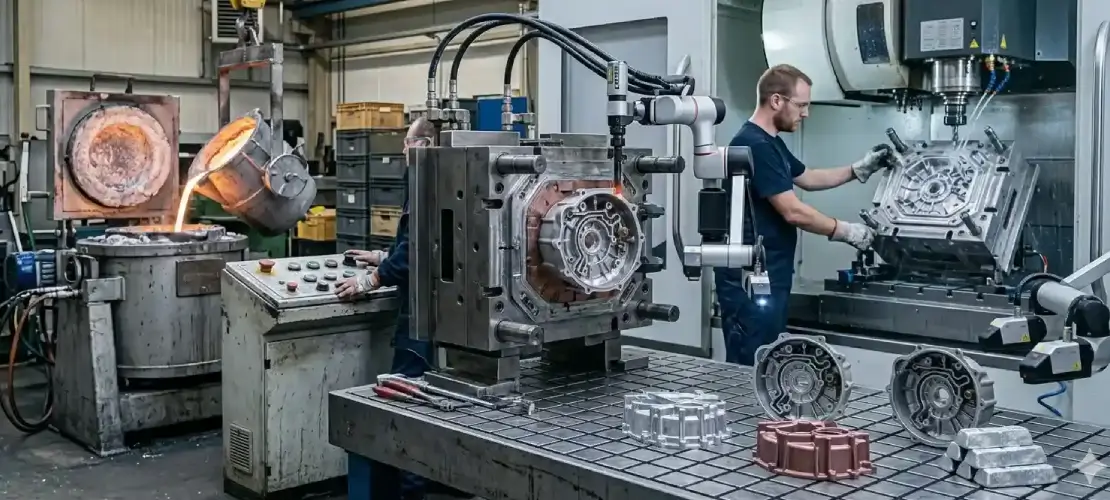
Each material gives the strength, weight, durability, and cost-effectiveness benefits. As material choice can affect the ability to achieve fast cycle times, it directly affects manufacturing speed and the final cost per part.
Benefits of Die Casting
The die casting process has several advantages, making it a preferred choice for manufacturers worldwide. Here are the die casting benefits.
High Precision and Detail
It allows the components with tight tolerances and complex shapes. For example, automotive manufacturers use this process to manufacture engine parts with intricate details.
High Efficiency
This process is suitable for large production runs and provides fast cycle times. It supports the manufacturers to create thousands of parts relatively quickly. Pressure die casting, especially high-pressure industrial die casting, is great for quickly producing thin-walled parts with high accuracy.
Excellent Dimensional Accuracy
It has the ability to create components with smooth surface finishes and close tolerances. Hence, it reduced the need for extra finishing or machining.
Cost-Effectiveness for Large-Scale Production
One of the major die casting benefits is its cost-effectiveness for large-scale manufacturing. After creating the initial mould, the process allows for the rapid production of identical parts, greatly lowering per-unit costs. This makes it a practical option for industries that need mass production, such as consumer goods and automotive manufacturing.
Durability and Strength
The materials used in die casting, such as aluminum and zinc, are known for their strength and durability. These qualities make die-cast components ideal for applications needing long-term reliability.
Eco-Friendly Manufacturing
It creates less waste compared to other methods. Many metals, like aluminum and zinc, are recyclable, aligning the process with sustainable manufacturing practices. Precision, efficiency, and sustainability make die casting a cornerstone of modern manufacturing.
Trends and Innovations
The die casting process has evolved and integrates new technologies. It also adopts sustainable practices and meets the needs of modern manufacturing. Here are some emerging trends reshaping the industry
Automation and Artificial Intelligence (AI)
Automation has improved the die casting process's efficiency. Robotic systems are now used in this industry to handle the mold preparation, injection, and finishing tasks quickly and accurately. With the AI algorithms it helps to analyze production data in real-time, identify possible defects and optimize casting settings for better results. Automated quality checks can identify inconsistencies, ensure accuracy, and reduce waste.
Lightweight Alloys for Sustainability
With the latest innovations, manufacturers now prefer to use lightweight alloys, like magnesium and advanced aluminum-zinc composites, in casting. These materials reduce the weight of components and become suitable for industries like automotive. It also reduces carbon emissions, improves fuel efficiency, and supports global sustainability goals.
Enhanced Simulation Tools
The industrial die casting sector also adopts modern simulation tools. This software has transformed mold design and process optimization in this industry. It helps the casting manufacturers to visualize metal flow, forecast potential defects, and fine-tune settings before production starts. This reduces trial-and-error, saving time and costs.
Additive Manufacturing Integration
3D printing plays a complementary role in die casting. It allows the quick prototyping of moulds, allowing manufacturers to test designs. Additive manufacturing also creates intricate mould features that traditional methods struggle with.
Sustainable Practices
The sustainability focus in the die casting industry allows manufacturers to adopt eco-friendly methods. It involves using energy-efficient furnaces, recycling scrap metal, and reducing emissions. It helps companies now track their carbon footprint and seek greener operations.
Industry-Specific Innovations
Industries like automotive and electrical are increasing the demand for smaller die-cast components. As a result, manufacturers are creating specialized moulds and alloys to meet these niche requirements. By embracing these trends, manufacturers can stay ahead and ensure efficiency, innovation, and environmental responsibility in die casting.
Purchase reliable die casting parts from Uni-Tech Casting
Uni-Tech Casting is the leading manufacturer, supplier and exporter of die casting components. We provide you with reliable solutions and meet your specific industrial needs. As a leading manufacturer, we combine skilled engineering with modern technology and create precise components by using premium materials like zinc or aluminum.
Our experience with the die casting process delivers you accurate and durable components. No matter whether you need the parts for automotive, electrical, or industrial applications, we serve you. We are dedicated to delivering reliable, scalable, and high-performance manufacturing solutions.
Conclusion
Die casting is crucial in manufacturing for its precision and efficiency, fulfilling industry demands through advanced metal casting processes. Future trends indicate a move towards sustainability and smarter technologies in die casting machines, promising even greater precision and less environmental impact.
As these innovations develop, die casting will continue to shape various sectors such as automotive and agriculture, highlighting its important role in modern manufacturing.
FAQs
Die casting is the manufacturing process where the molten metal is injected into a mold cavity under high pressure and forms complex shapes. It is widely used in diverse industries to produce detailed and durable metal parts efficiently.
The two main types of Die casting are cold chamber die casting and hot chamber Die casting. Hot chamber casting is used for low melting point alloys (magnesium, zinc), and cold chamber casting is used for high melting point metals (copper, aluminum).
The common die casting materials are zinc, aluminum and magnesium alloys. Each material provides various benefits like zinc malleability, aluminum's lightweight properties and magnesium's excellent strength-to-weight ratio. It makes it ideal for various applications.
The Die casting process includes the steps like preparation, injection, cooling, ejection and trimming. It involves injecting molten non-ferrous alloys like zinc, aluminum or magnesium into reusable steel molds (dies) and forming complex shapes with high surface finish and efficiency.
The common casting defects are incomplete filling, gas or shrinkage voids, excess metal at joints, and surface imperfections like blisters or flow marks. It is caused due to the temperature, venting or pressure settings and affects its surface finish and structural integrity.
Read more: High-Pressure Die Casting: Complete Guide